news
Frankfurt's U5 Extension Hits Milestone as City Grapples with Rail Delays and Airport Freight Surge
A week of conflicting transport news leaves commuters, freight operators and city planners asking whether Frankfurt's infrastructure can keep pace with its own ambitions.
How we reported this
The tunnelling machine boring beneath Europaviertel reached the 800-metre mark on Wednesday, the most tangible progress yet on the U5 metro extension that Frankfurt's transport authority VGF has been promising since the project broke ground in late 2023. The milestone puts the line, which will ultimately connect Hauptbahnhof to the Europaviertel exhibition district and on toward Niederrad, roughly on schedule for its revised 2029 opening, according to project documents filed with the city's transport committee this week.
The timing matters. Messe Frankfurt's calendar is jammed through the second half of the decade, with events like Automechanika and the IAA Mobility circuit bringing hundreds of thousands of visitors annually to grounds that are currently served by a single S-Bahn corridor and a thicket of bus routes. Each major fair still triggers gridlock along Theodor-Heuss-Allee. City planners argue that the U5 extension is the structural fix; critics say 2029 is too late and the interim congestion management plan, a patchwork of temporary shuttle services, is inadequate.
Airport Freight Numbers Complicate the Picture
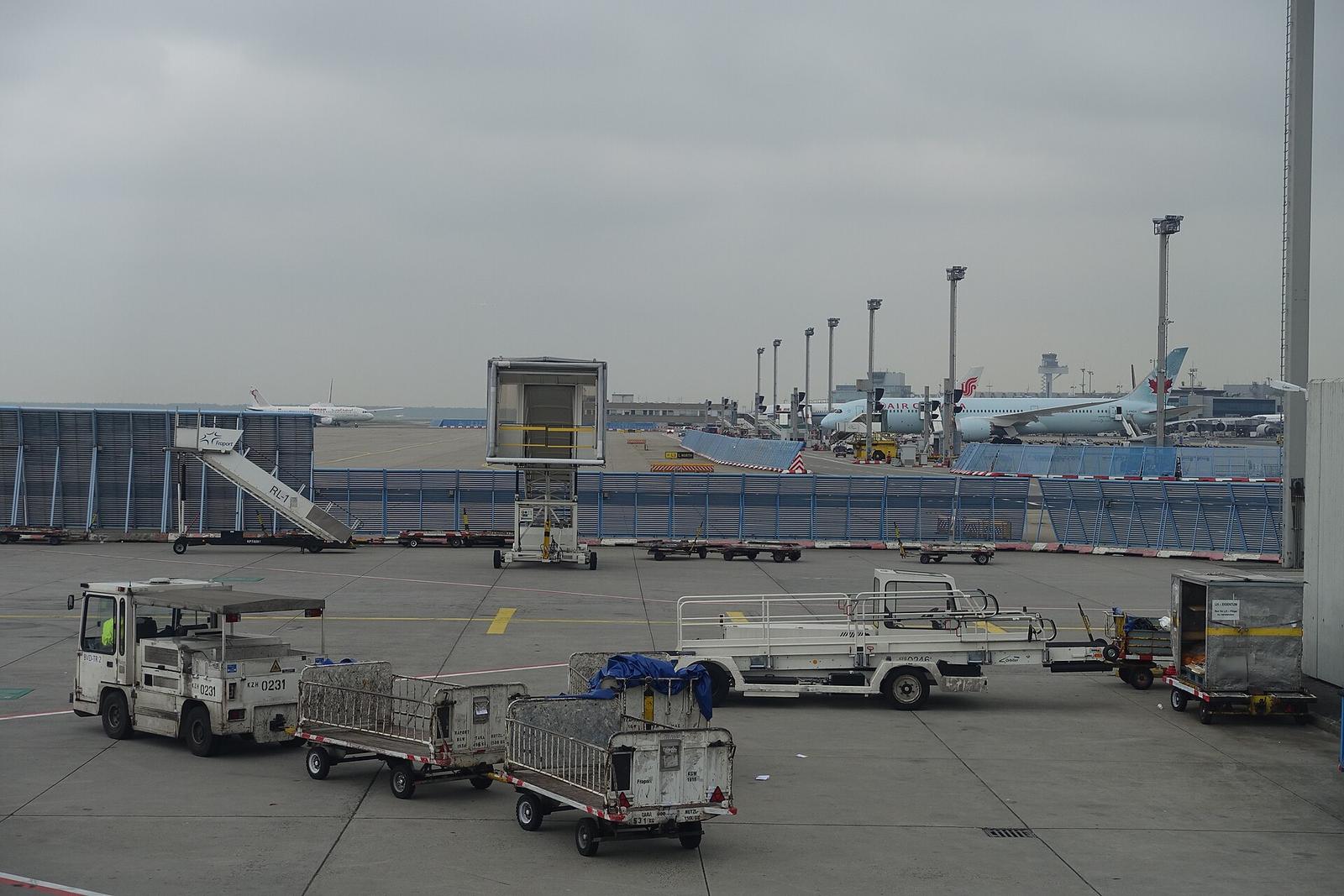
While the metro project advances underground, Fraport reported this week that cargo volumes at Frankfurt Airport rose 6.2 percent year-on-year in the first five months of 2026, pushing the hub's freight throughput to approximately 1.03 million tonnes in that period alone. Frankfurt handles roughly half of all air freight entering or leaving Germany, and the post-Brexit redistribution of logistics hubs has added structural demand that shows little sign of retreating. The airport's CargoCity Süd, which anchors the southern freight apron, is operating at close to 90 percent of its rated capacity on peak days, according to internal Fraport capacity assessments circulating among tenants.
That pressure is already spilling onto road networks. Truck movements on the A3 motorway corridor between the airport junction at Mönchhofdreieck and the city's southern ring have increased measurably, and the city's environmental senate warned in a June 30 briefing that nitrogen dioxide readings along Hanauer Landstraße, one of the primary surface routes feeding the cargo district, remain above EU limits. A planned relief road linking CargoCity directly to the A5 interchange has been stalled in planning approval since 2024, held up partly by noise-impact objections from Sachsenhausen residents and partly by federal funding discussions that have yet to conclude.
Commuters Feel the Strain Now
On the passenger side, Deutsche Bahn's performance on the Frankfurt-Mannheim corridor deteriorated sharply in June, with punctuality on ICE services dropping to 61 percent, well below the network average. Engineering works at Darmstadt Hauptbahnhof forced single-track operations on several days, cascading delays through Frankfurt Hauptbahnhof's south platforms. The RMV regional authority confirmed that the works will continue in a reduced form until August 10, urging travellers to check journey times before commuting.
Inside the city, the long-delayed tram extension along Kleyerstraße in Gallusviertel edged forward after the city council approved revised utility-diversion contracts worth €14 million on Tuesday. The original contractor dispute, which had frozen work since February, appears to have been resolved after the city's building authority Stadtplanungsamt brought in a second firm to handle the underground re-routing of gas and water mains. Physical construction on the surface track bed is now expected to restart in September, though the 2027 completion date for that section is considered optimistic by several council members who reviewed the revised schedule.
For Frankfurt residents and the substantial expat workforce centred around the ECB campus in Ostend and the banking towers of Innenstadt, the practical advice is straightforward: the next several months will be the most disruptive before conditions improve. VGF recommends loading the RMV app's live disruption feed and signing up for SMS alerts on key lines. Freight shippers moving goods through CargoCity Süd should build additional lead time into road-transport bookings through at least October, when the A3 resurfacing programme south of Kelsterbach is also scheduled to begin. The infrastructure is being built, slowly, expensively, and not quite fast enough for the city using it every day.